By the end of 2027, generic ‘I use ChatGPT’ won’t be a marketing skill, it’ll be a baseline assumption. The marketers who’ll still be competitive are the ones who’ve already moved on to four specific capabilities. Here’s what they are, why they matter, and how to audit yourself against them.
By 2027, ‘I use ChatGPT’ will be the marketing equivalent of ‘I use email.’ The four skills separating competitive marketers from baseline ones are: AI-native research and insight, workflow and agent design, brand-voice prompting at scale, and AI-augmented measurement. Self-audit yourself against the 12 questions at the end of this piece.
Three years ago, “uses AI in marketing” meant a curious resume bullet. Two years ago it meant some prompt experience. Today it means tactical AI use across content and brainstorming. By the end of 2027, the bar moves again: it will mean a structural understanding of how to deploy AI across the marketing function, not just on individual tasks.
This isn’t speculation. PwC’s 2026 AI Jobs Barometer shows job postings for marketing roles requiring “AI fluency” grew 320% year-over-year, and the language is shifting from generic prompt experience to specific capabilities like agent design and AI-augmented measurement. [1] The median wage premium for marketers with named AI skills (vs. generic AI familiarity) is now £15-20k in the UK and substantially more in US markets. [2]
The four skills below are the ones that will draw a clear line between competitive and uncompetitive marketers by end of 2027. None of them are radically new. All of them are radically underdeveloped in the average marketing org today. The good news is the gap is closable: 6-12 months of focused practice gets you to the new standard.
What it means: Using AI as your default first move for any research task, not Google. Audience research, competitor analysis, market sizing, trend identification, customer interview synthesis, ad creative analysis, post-campaign learning.
A capable AI-native researcher in 2027 doesn’t open Google for most research questions. They open Perplexity, Claude, or ChatGPT (with web browsing on). They write structured research prompts. They get back synthesised answers with cited sources in 60-90 seconds. They spend the rest of the time evaluating the sources, not gathering them.
They also use AI to do qualitative synthesis at scale: paste 30 customer interview transcripts, ask for the top patterns and a 5-quote support set per pattern, get back something that would have taken a researcher a week.
Research is the most leverageable capability AI has unlocked for marketers. The teams using AI for research operate at 5-10x the speed of teams using Google + manual reading. That speed compounds into faster campaign decisions, faster competitive responses, and richer audience understanding.
You have it if: you can synthesise a competitor analysis using only AI tools in under 30 minutes. You don’t have it if: you still open Google as your first move for market research questions.
What it means: Designing repeatable AI-powered marketing workflows that run with minimal human input. Not single prompts. Multi-step processes that combine AI with your existing tools.
The 2027 marketer thinks in terms of agents and workflows, not individual prompts. They use tools like Zapier, n8n, Make, or platform-native agent builders (HubSpot Breeze, Salesforce Agentforce, Claude Cowork). They’ve built at least 3-5 working workflows that produce real marketing output without them being in the loop for every step.
Examples: an agent that drafts the weekly performance newsletter from raw analytics data. A workflow that monitors competitor pricing pages and flags changes. A pipeline that turns long-form blog posts into 10 social variants and schedules them. None of these require coding. All of them require workflow thinking that most marketers don’t yet have.
This is where time genuinely compounds. A single useful workflow saves 2-5 hours a week, every week, forever. A marketer with 5 workflows is running their function with 10-25 hours of weekly capacity that the comparable marketer without workflows is doing by hand.
You have it if: you can name 3 specific multi-step workflows you’ve built that run for you every week. You don’t have it if: you’ve only ever used AI inside a single chat window.
What it means: Making AI output sound like your brand, consistently, across thousands of pieces of content, without rewriting every one.
The capable marketer in 2027 has documented their brand voice in a format AI can use: typically a 1-2 page style guide with do’s and don’ts, sample sentences, banned phrases, and 3-5 reference pieces. They paste this into every AI session or save it as a Claude Project / Custom GPT / Custom Instructions. Output is on-brand 85% of the time on first pass, vs. 30% for a marketer who just types a prompt and hopes.
They also know how to spot when AI drift creeps in (homogenised tone, generic structures, hedge phrases) and how to fix it in the prompt before it ships.
The marketers shipping the most AI-assisted content are also the ones at highest risk of brand voice collapse. The differentiation that distinguishes your brand from a competitor lives in the tone, structure, and pattern of your writing. If everyone’s AI output sounds the same, your brand becomes invisible. Brand voice prompting is the skill that lets you ship volume AND stay distinctive.
For deeper context on this, see AI brand voice consistency at scale.
You have it if: you have a written brand voice document you actively use in AI prompts and can produce 50 on-brand pieces of content in a day. You don’t have it if: your AI-generated content sounds vaguely like your brand but you can’t articulate why or when it drifts.
What it means: Using AI to do analytical and attribution work that previously required a data analyst, in plain English, on real datasets.
The 2027 marketer can drop a CSV of campaign performance data into Claude or ChatGPT and ask questions like “which audience segments overdelivered on CPA this quarter, what’s the common pattern, and what’s my hypothesis for the next test.” They can do post-campaign attribution analysis without filing a ticket with the data team. They can build their own dashboards and visualisations in 20 minutes that previously took a week of analyst time.
This isn’t replacing the data team. It’s freeing the data team to do harder work while marketers handle their own first-pass analysis.
The biggest constraint on marketing decision speed in most companies is access to data analysis. Marketers who can self-serve on analysis make decisions 5-10x faster than peers stuck waiting for analyst availability. This is the single skill that most directly impacts campaign velocity and learning cycles.
You have it if: you’ve personally analysed a marketing dataset over 1,000 rows in the last 30 days using AI, and produced a written analysis from it. You don’t have it if: you still send all analysis requests to a data analyst.
Score yourself honestly. 1 point for each “yes.” Total possible: 12.
If you scored 7+: pick the lowest-scoring of the four skill areas and spend the next 90 days specifically on it. Set yourself one project per month that forces you to develop that capability. The path from 9 to 12 is just deliberate practice on the gap.
If you scored under 7: you need more structure than self-study can provide. Look for cohort-based programs that specifically cover these four capabilities for marketers, not generic “AI for everyone” courses. Our AI courses for marketing professionals are built around exactly these four skill areas, with real campaigns as the practice material.
For the broader career context, see our pieces on AI skills in 2026 job descriptions and the marketing team AI skills gap diagnostic if you’re the one running the audit for your whole team.
Some pieces will be (e.g. tools that bundle workflow design into a friendly UI). But the underlying judgment (which research to run, which workflow is worth automating, what brand voice you’re protecting, what analytical question is the right one) doesn’t get automated. It’s the marketers with the judgment who will direct the AI; the ones without it will be directed by it.
No. The best tools for this (Zapier, n8n, Make, Claude Cowork, Custom GPTs) are explicitly no-code. You need workflow thinking, not coding skill. If you can map out a process on paper, you can build it in one of these tools in a couple of hours.
For most marketers, skill 2 (workflow and agent design) has the fastest payback because it compounds: every workflow you build saves hours every week, forever. Skill 4 (measurement) has the highest career upside because it unlocks faster decision-making. Skill 1 (research) is the easiest to build. Skill 3 (brand voice) matters most for senior creative roles.
By late 2026, job postings for senior marketing roles regularly require specific AI capabilities by name (e.g. ‘experience designing marketing workflows in Zapier or Make,’ ‘comfort with self-serve analytics in AI tools’). The wage premium between marketers with one named AI skill vs. four sits around £15-20k in the UK and $20-30k in major US markets, with the gap widening.
All four are learnable solo with enough discipline and time (probably 9-12 months of consistent practice). A structured program with peer accountability and real coaching compresses that to 3-4 months for most people, which is why cohort programs have a strong ROI even at meaningful price points. Self-study works if you’re highly motivated; structured programs work for most people.
About this guide
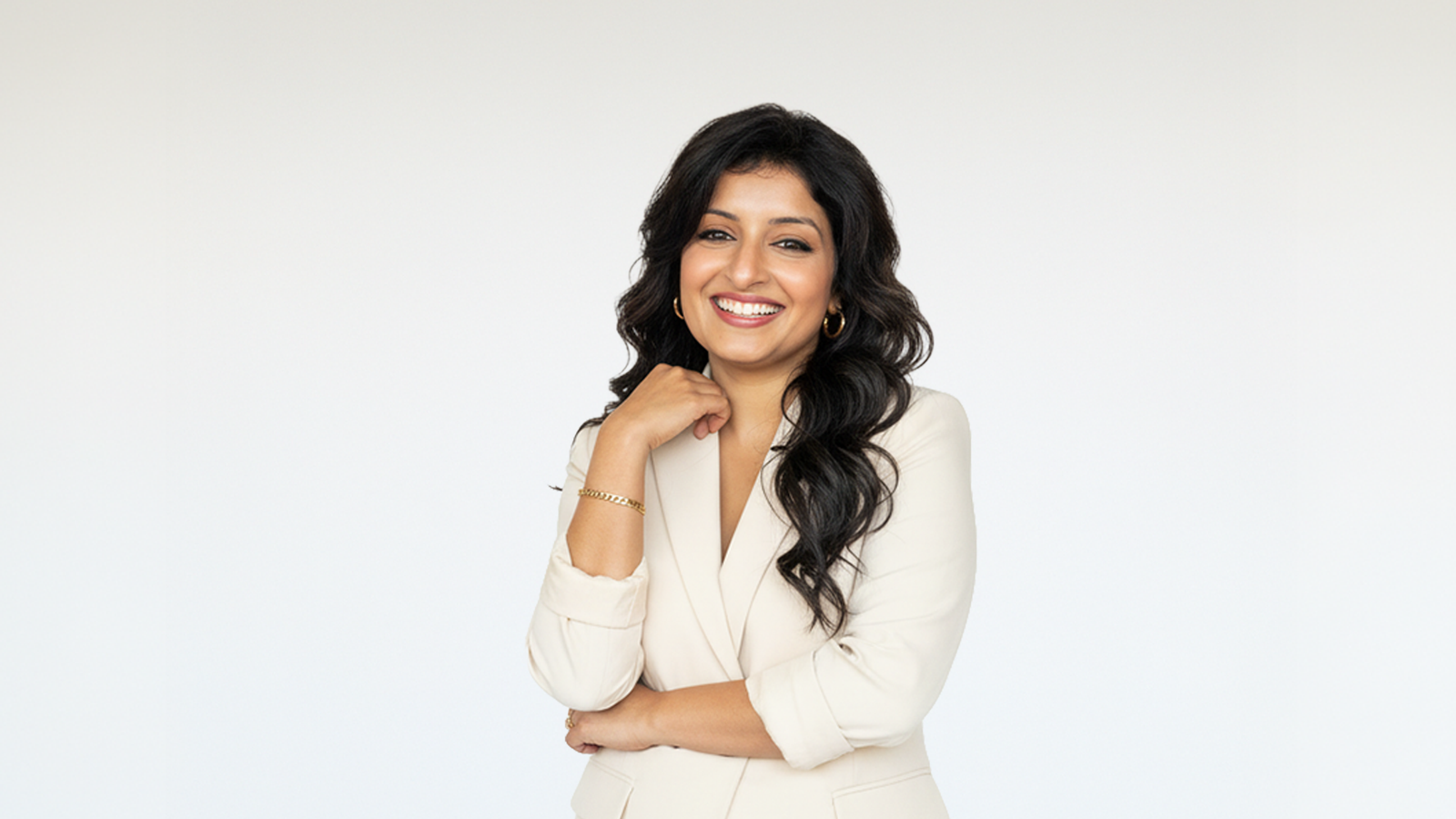
This article was written by Hina Mian, co-founder of Future Factors AI, drawing on 10+ years in marketing strategy, hands-on experience training marketing teams across UK and US clients, and 2026 research from PwC, Forrester, and LinkedIn’s Future of Work data on marketing skill demand.
Sources