AI writes ad copy fast but generic, so the quality lives entirely in your brief and your edit. Feed ChatGPT your offer, audience, angle, and the platform’s character limits, ask for many variations built on different hooks, then cut the fluff and add the specifics only you know. Use AI for volume and speed; keep the strategy and the final polish human.
The truth about AI ad copy
Let me save you some disappointment. If you open ChatGPT and type “write me a Facebook ad for my coaching business,” what comes back will be fine. Smooth, grammatical, completely forgettable. The kind of ad that gets scrolled past in 0.2 seconds.
That’s not ChatGPT failing. That’s ChatGPT doing exactly what you asked, with nothing to work from. Here’s the mental shift that changes everything: AI is a brilliant draft engine and a useless strategist. It can produce 20 versions of an idea in seconds. It cannot tell you which idea is worth running, who your customer really is, or why anyone should care. That part is still your job.
And it’s worth getting right. ChatGPT crossed 800 million weekly users in late 2025, which means your competitors are using it too. [1] The teams pulling ahead aren’t just the ones using AI. They’re the ones briefing it like a sharp creative director instead of a vending machine. After 10+ years running campaigns, I can tell you the difference between a lazy prompt and a proper brief is night and day, and it comes down to a few habits.
Feed it the right brief first
Ad copy lives or dies on the inputs. Before you ask for a single line, give ChatGPT the things a good copywriter would demand to know. You don’t need a formal document. You need five facts:
- The product and offer. What exactly are you selling, and what’s the specific deal? “A 6-week AI bootcamp, currently £200 off until Friday” beats “an online course.”
- The audience. Who is this for, in human terms? “Marketing managers at small firms who feel behind on AI” is a brief. “Professionals” is not.
- The core benefit. The one transformation that matters most. Not ten features. One promise.
- The objection. What makes them hesitate? Price, time, “I’m not technical”? Good ads answer the objection before it’s spoken.
- The action. Exactly what you want them to do: book a call, start a trial, grab the discount.
Paste those five things in once, and every prompt afterwards gets dramatically better. This is the same foundation we use across all of our ChatGPT marketing workflows, and it’s the step almost everyone skips.
ChatGPT can only be as specific as your brief. Vague in, vague out. Three minutes spent on a real brief saves you an hour of regenerating bland copy and wondering why it all sounds the same.
The prompt structure that produces usable copy
Here’s the format I use. It’s built from five parts, and once you’ve got the shape, you can adapt it to any platform: Role + Offer + Audience + Angle + Format.
You are a direct-response copywriter. I’m advertising [offer] to [audience], whose main hesitation is [objection]. The core benefit is [benefit]. Write 10 ad variations, each built on a different angle: pain point, clear benefit, curiosity, social proof, and urgency. Keep each under [character limit]. End each with this call to action: [action].
Notice what that prompt does. It assigns a role (so the model adopts a sharper voice), hands over the brief, and crucially, asks for different angles rather than ten versions of the same idea. That last part is the secret. Left to its own devices, ChatGPT will give you ten near-identical lines. Forcing distinct angles is how you get meaningfully different ads to test.
Run that prompt and you’ll get a menu. Some lines will be duds. Two or three will make you go “oh, that’s actually good.” Those are the ones you take forward.
Match the platform: Google, Meta, LinkedIn
Generic ad copy ignores the rules of the platform it’s running on. Each one has different constraints and a different reader mindset, and ChatGPT will happily respect them if you tell it the rules.
Google Search ads. These are responsive search ads: you give Google up to 15 headlines (30 characters each) and 4 descriptions (90 characters each), and it mixes them. [2] So your prompt should say exactly that: “Write 15 distinct headlines, max 30 characters each, and 4 descriptions, max 90 characters each, for a Google responsive search ad.” The intent here is high: people are actively searching, so be clear and benefit-led, not clever.
Meta (Facebook and Instagram). Here you’re interrupting someone mid-scroll, so the first line has to stop the thumb. Ask for “primary text options where the first sentence is a scroll-stopping hook,” and have it lean into emotion and curiosity. Visual-first platform, so the copy supports the image, not the other way around.
LinkedIn. Professional context, so the tone shifts. Less hype, more credibility and specificity. Ask ChatGPT for copy that “speaks to a business outcome and sounds like a knowledgeable peer, not a salesperson.” Naming a real role or industry pain works far better here than clever wordplay.
If you’re weighing which AI tool handles this best, we compared the main ones in ChatGPT vs Gemini for marketing, and honestly, for ad copy the difference is smaller than the difference between a good brief and a bad one.
Generate 20 variations for testing
The biggest unlock AI gives advertisers isn’t better copy. It’s volume. Testing is how you actually find winners, and the old bottleneck was always “I don’t have time to write 20 versions.” That bottleneck is gone.
Ask for the full spread on purpose: “Give me 20 headline options across these angles: 5 benefit-led, 5 pain-led, 5 curiosity-led, 5 social-proof-led.” Now you’ve got a structured test instead of a guess. Load several into your responsive search ad or set them up as variants, let them run, and let the data tell you which angle your audience responds to.
This is where AI earns its keep. The point isn’t that any single AI line is a masterpiece. It’s that you can now test ten angles in the time it used to take to write one, and testing is what compounds. Pair it with a system for organising what works, like the one in our ChatGPT prompts for email marketing guide, and your whole testing operation speeds up.
More variations only helps if you actually test and read the results. Twenty ads you launch and never check is just twenty times the mediocrity. Let the data, not your gut, pick the winner.
Edit like a human (what AI always gets wrong)
Never run an AI ad untouched. Not because it’ll be terrible, but because it’ll be generic in three predictable ways, and fixing them takes two minutes.
First, it overuses hype words. “Revolutionary,” “game-changing,” “unlock your potential.” Cut them. They’re noise, and your audience tunes them out. Replace vague enthusiasm with one concrete detail.
Second, it’s allergic to specifics. AI writes “save time,” but “save 5 hours a week” converts better because it’s believable. Add the real number, the real timeframe, the real outcome. You know these; the AI doesn’t.
Third, it has no idea who you actually are. Drop in the detail that makes you you: the guarantee, the founder’s story, the specific result a real customer got. That’s the line that makes an ad feel like a real business instead of a template. Train it on your tone first and it gets closer, which is the whole point of our guide to training AI on your brand voice, but the final polish is still a human call.
A real worked example
Let’s make this concrete. Say you’re advertising a project-management tool to small agency owners who feel buried in admin.
Lazy prompt: “Write a Facebook ad for my project management software.” Result: “Streamline your workflow and boost productivity with our powerful project management solution.” Forgettable.
Briefed prompt: “You’re a direct-response copywriter. I sell a project-management tool to small agency owners drowning in admin. Their hesitation: they’ve tried tools that were too complex. Core benefit: they get their evenings back. Write 5 Meta primary-text options, each opening with a scroll-stopping hook, under 125 characters, ending with ‘Start your free trial.'”
Result: lines like “You didn’t start an agency to spend Sundays updating spreadsheets.” Now that stops a scroll. Same tool, same AI, wildly different output. The only thing that changed was the brief. That’s the whole game.
What to do this week
Take one ad you’re currently running, or one you’ve been meaning to write. Spend three minutes writing the five-part brief: offer, audience, benefit, objection, action. Then run the structured prompt and ask for 20 variations across four angles.
Pick your three favourites, give each a quick human edit (cut the hype, add a real number, drop in something only your business can say), and set them up as a test. By the end of the week you’ll have a live experiment instead of a hunch.
AI didn’t make copywriting obsolete. It made the brief and the edit the whole job. The marketers who win with it aren’t better typists. They’re better thinkers who’ve learned to hand the typing to a machine and keep the strategy for themselves.
Frequently asked questions
Can ChatGPT write ad copy?
Yes, and it’s very good at producing many variations quickly, but only if you brief it well. Give it your offer, target audience, core benefit, the main objection, and the action you want, plus the platform’s character limits. ChatGPT handles the volume; you handle the strategy and the final edit. Treat its output as strong first drafts to test, not finished ads to launch untouched.
What is the best prompt for ad copy?
Use a five-part structure: Role plus Offer plus Audience plus Angle plus Format. For example: ‘You are a direct-response copywriter. I’m advertising [offer] to [audience] whose hesitation is [objection]. Core benefit is [benefit]. Write 10 variations on different angles (pain, benefit, curiosity, social proof, urgency), each under [character limit], ending with [call to action].’ Asking for different angles is what stops it producing ten near-identical lines.
How many ad variations should I generate with AI?
Aim for around 20, split deliberately across angles, for example 5 benefit-led, 5 pain-led, 5 curiosity-led, and 5 social-proof-led. Google responsive search ads let you test up to 15 headlines and 4 descriptions in a single ad, so generating a structured spread gives the platform real material to optimise. Just make sure you actually run the test and read the results.
Is AI-generated ad copy any good?
It’s a strong starting point, not a finished product. AI copy tends to overuse hype words, avoid specifics, and miss what makes your business unique. The fix is a quick human edit: cut the buzzwords, add a real number or outcome, and drop in a detail only you know, like a guarantee or a customer result. Briefed and edited, AI copy competes with anything. Unedited, it reads like every other template.
Which platform character limits should I tell ChatGPT?
For Google responsive search ads, headlines are 30 characters and descriptions are 90 characters, with up to 15 headlines and 4 descriptions. For Meta, keep primary text punchy with a strong opening line, ideally under about 125 characters before the ‘see more’ cut-off. For LinkedIn, prioritise a credible, peer-to-peer tone over hype. Always state the exact limit in your prompt so the copy fits without rewriting.
About this guide
A practical, non-technical walkthrough from the team at Future Factors AI, who have trained 2,000+ professionals to use AI with confidence. Tools and features change often, so confirm current settings and always verify specific claims before you rely on them.
Related reading
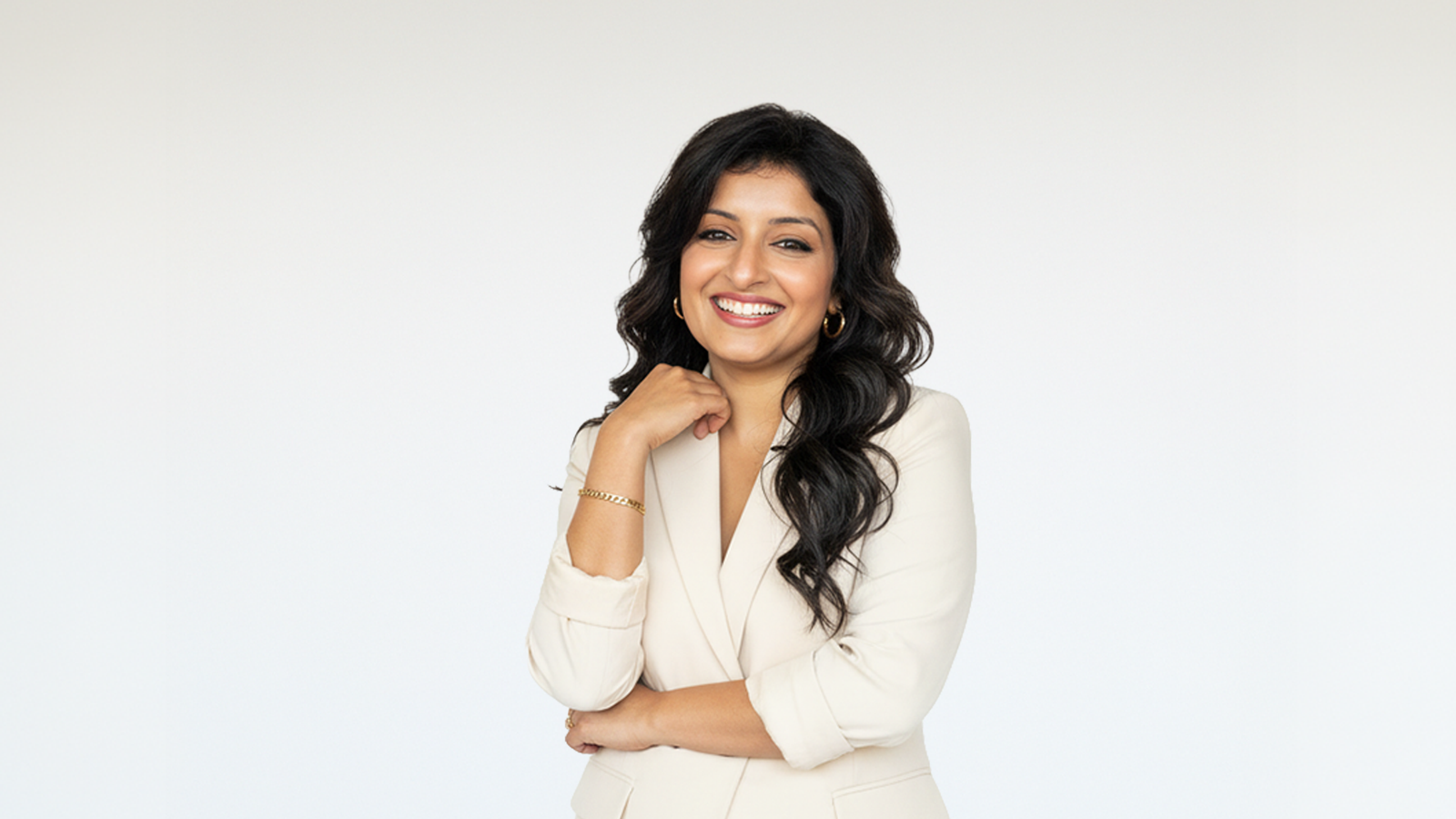
Hina brings 10+ years of marketing strategy and brand growth experience to the AI conversation. She helps businesses and teams cut through the noise and apply AI where it actually matters. Future Factors offers AI Bootcamps, Corporate Workshops, and Speaking & Consulting for organisations ready to move from AI-curious to AI-confident.
More about Hina →- [1] TechCrunch. ChatGPT hits 800M weekly active users. 2025.
- [2] Google Ads Help. About responsive search ads (character limits). 2026.
- [3] HubSpot. State of Marketing Report. 2026.
- [4] Meta. About text in ads. 2026.
- [5] Litmus. The ROI of marketing channels. 2025.